Rust Cloth Farming Record Attempt
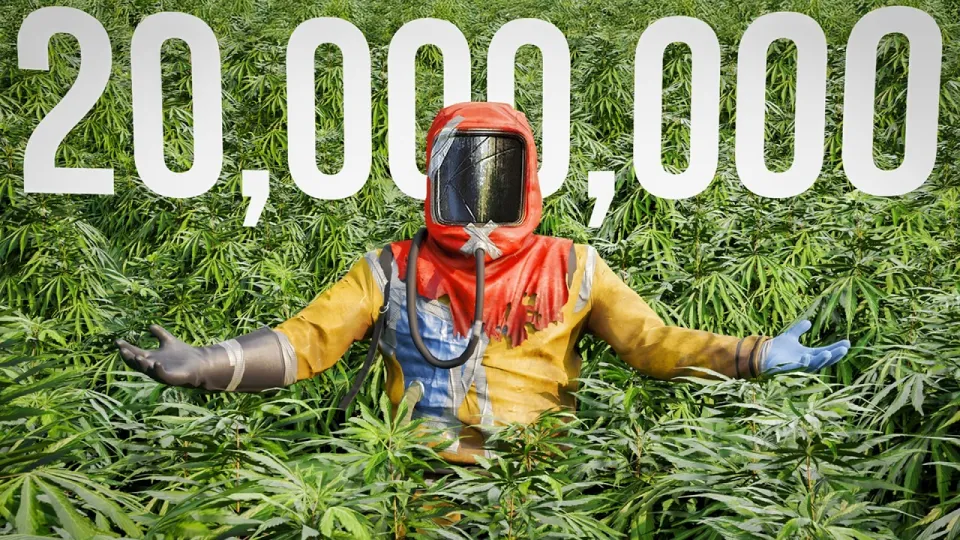
Video: I Became Rust's #1 Farmer...
Need articles like this for your video? They help promote it on YouTube and Google — order them in the Telegram bot @sat_sit_bot. The bot writes and publishes the articles itself (with your YouTube video embedded) on popular topical websites (no ads). Free trial — 50 articles.
· based on the channel JTeles
In Rust, cloth is the raw material for bandages, clothing, and advanced crafting, and farming it at scale is usually a clan effort. JTeles set out to become Rust's #1 farmer by turning 126,000 cloth into 20,000,000 in a single wipe, using a massive player-built farm and a crew of viewers. The attempt is documented in the video I Became Rust's #1 Farmer..., and the main sponsor link War Thunder free bonus gives access to a free-to-play game with starter bonuses.
What is the 20 million cloth challenge in Rust?
The 20 million cloth challenge is a self-imposed farming goal: start with a small amount of cloth and scale production until the stash reaches 20,000,000 units before the wipe ends. JTeles began with 126,000 cloth and gave himself 7 days to hit the target. To make it feasible, he invited viewers onto the server to help build and defend the operation. The result was the biggest cloth farm seen in Rust, a compound so large that rendering it caused server lag. The challenge combines resource management, base design, and diplomacy, because a farm that size becomes a target.
How the biggest cloth farm in Rust was built
Building a cloth farm at this scale requires planning, labor, and defenses. The project followed a clear structure:
- Seed stock: 126,000 cloth provided the starting capital for tools and seeds.
- Viewer recruitment: JTeles invited viewers to join the server, creating a workforce and defense force.
- Farm layout: The team constructed a massive planting and harvesting operation, with rows of planters and automated collection points.
- Defense: Walls, turrets, and layered compounds protected the farm from raids.
- Logistics: Storage and transport systems moved cloth from planters to secure boxes without bottlenecks.
The farm's scale was its own enemy: the compound became so large and built-up that looking at it caused server lag. That lag is a badge of honor for the project, but it also made the base easier to find and attack.
The clan war that tried to stop the farm
A large Russian clan discovered the 20 million cloth goal and made stopping it a priority. The conflict produced constant PvP, raids, and base defense fights. JTeles and his crew had to balance farming time with combat, often defending while offline. Alliances formed to counter the clan's pressure, and the server turned into a chaotic battleground. The clan's efforts did not stop the farm from growing, but they turned a farming challenge into a survival test. The experience shows that in Rust, a big farm is never just a farm; it is a strategic target.
Why cloth farming matters in Rust
Cloth is one of the most versatile resources in Rust. It is required for bandages and medkits, clothing for temperature resistance, and components for advanced crafting. A large cloth surplus can be traded for scrap, guns, or alliances. Farming cloth at scale also supports team play: a dedicated farm keeps a clan supplied during long raids and defenses. JTeles's goal of 20,000,000 cloth is extreme, but it highlights how resource dominance can shape a wipe. For solo players, even a fraction of that output can fund a wipe's worth of gear.
Viewer questions and practical lessons
Viewers often ask how a farm that large avoids being raided. The answer is layered defense and active teammates: the crew defended the compound while JTeles was offline, which several viewers praised. Another common question is about the time commitment; the 7-day timeline required near-constant farming and coordination. Some players shared their own large-scale farm stories, like a 1008-planter setup that yielded 17.4 million cloth before automation updates, which shows that manual farming at scale is possible but exhausting. The key lessons are to recruit help, automate where possible, and expect PvP attention.
All links from the video
- War Thunder free bonus (PC/consoles)
- War Thunder mobile
- JTeles Discord
- JTeles on Twitter/X
- JTeles on TikTok
Conclusion: a farming record with a target on its back
JTeles turned 126,000 cloth into a 20,000,000-unit goal and built the biggest cloth farm in Rust, all within a single wipe. The project attracted a clan war, forced constant defense, and produced a compound so large it lagged the server. The video breakdown by JTeles shows that farming records are as much about diplomacy and defense as about planting and harvesting. For players looking to try their own farming challenge, start with War Thunder's free bonus to support the channel and get a new game to play between wipes.
Key takeaways
- JTeles started with 126,000 cloth and aimed for 20,000,000 in one wipe.
- The farm was built with viewer help and became the biggest cloth farm in Rust.
- A large Russian clan tried to stop the project, leading to PvP, raids, and alliances.
- The challenge was completed within 7 days on a single server.
- The final compound was so large it caused server lag when rendered.
Questions & answers
How long did it take to farm 20 million cloth in Rust?
JTeles set a 7-day deadline for the challenge, starting with 126,000 cloth. The farm was built and defended around the clock with viewer help, and the goal was reached within that wipe. The timeline required constant coordination between farming and PvP defense.
What happens when a farm gets too big in Rust?
A massive farm becomes a server-wide target and can cause performance issues. In this case, the compound was so large that rendering it caused server lag. It also attracted a large clan that tried to stop the operation, leading to raids and constant PvP.
Can solo players replicate this cloth farm?
Replicating a 20 million cloth farm solo is extremely difficult due to time and defense requirements. Viewers shared stories of manual farms yielding 17.4 million cloth, but those took hours of planting and harvesting by hand. Solo players should scale down and focus on automation and hidden locations.
What is the best way to defend a large farm in Rust?
Layered defenses, turrets, and active teammates are essential. JTeles's crew defended the compound while he was offline, which viewers highlighted as a key factor. Alliances and offline defense schedules also help deter raids.
Source: I Became Rust's #1 Farmer... · Markdown version